Skip to content
Goldenback

Find your problem below to see what usually causes it, how physiotherapy helps, and the signs that mean you should see a doctor first.

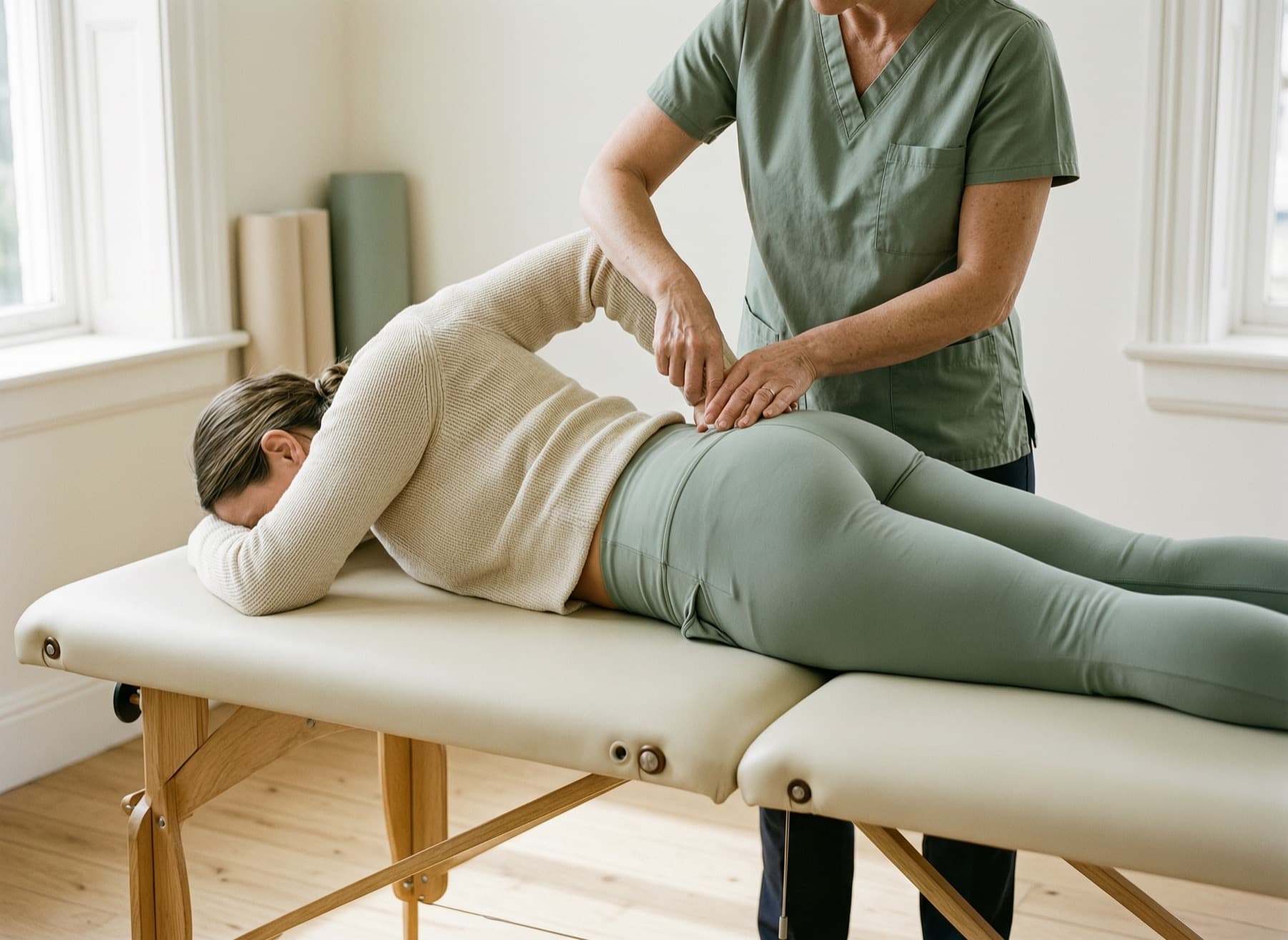
A physiotherapist checking a woman's spine

Find what is bothering you

Low back pain

Why does my lower back hurt?

The most common reason people see a physiotherapist. Most low back pain is not caused by serious damage and improves with the right movement and reassurance.

Book an assessment

Common signs

  • Ache or stiffness across the lower back
  • Pain when bending, lifting or sitting long
  • Stiff in the morning

How we help

We find the movements that aggravate it, ease the pain with hands-on care and build a graded exercise plan so it is less likely to return.

See a doctor first: Numbness around the groin, trouble passing urine, unexplained weight loss or fever with back pain need a doctor straight away.

Neck & shoulder pain

Why are my neck and shoulders always tight?

Often linked to long hours at a desk or phone, stress and sleep. Usually very treatable once the habits that keep it going are changed.

Book an assessment

Common signs

  • Tightness across the shoulders
  • Headaches starting at the neck
  • Reduced turning of the head

How we help

Manual therapy to settle the pain, then strength and mobility work plus practical changes to your desk and day.

See a doctor first: Severe dizziness, double vision, or weakness in the arms needs a medical check first.

Sciatica

Why does pain run down my leg?

Pain, tingling or numbness travelling from the back into the leg, usually from an irritated nerve. Most cases improve without surgery.

Book an assessment

Common signs

  • Pain below the knee
  • Pins and needles in the leg or foot
  • Worse when sitting or coughing

How we help

We calm the irritated nerve with positions and movements that ease it, then gradually restore normal activity.

See a doctor first: Leg weakness that is getting worse, or any loss of bladder or bowel control, is an emergency.

Sports injuries

How do I get back to sport safely?

Sprains, strains and overuse injuries from running, football, the gym and more. Returning too soon is the most common reason injuries come back.

Book an assessment

Common signs

  • Pain during or after training
  • Swelling after a twist or impact
  • Loss of power or confidence

How we help

A staged return: protect, load, strengthen and test, with clear criteria before you go back to full training.

See a doctor first: If you cannot put weight on the leg or the joint looks deformed, get an X-ray first.

Knee pain

What is causing my knee pain?

From runner's knee to arthritis, knee pain usually responds well to strengthening the muscles around the hip and knee.

Book an assessment

Common signs

  • Pain on stairs or squatting
  • Clicking or a feeling of giving way
  • Stiffness after rest

How we help

Assessment of how you move, then progressive strength and control work tailored to your knee.

See a doctor first: A hot, very swollen knee or one that locks and will not straighten needs a medical review.

Recovery after surgery

What should rehab look like after my operation?

Good rehabilitation decides a large part of how well surgery works. We follow your surgeon's protocol and set clear goals for each stage.

Book an assessment

Common signs

  • Recent joint replacement or repair
  • Stiffness or weakness after an operation
  • Unsure what is safe to do

How we help

Structured stages from early movement to full strength, coordinated with your surgical team.

See a doctor first: Redness, heat, fever or calf swelling after surgery need your surgeon or doctor promptly.

Posture & desk strain

Is my desk job causing my pain?

There is no single perfect posture. Pain from desk work usually comes from staying still for too long, not from sitting a certain way.

Book an assessment

Common signs

  • Stiff back by the end of the day
  • Wrist or forearm ache
  • Tension headaches

How we help

A simple set-up check, movement breaks that fit your day and exercises that make you more resilient.

See a doctor first: Constant numbness in the hands, especially at night, should be checked by a doctor.

Ankle sprains

My ankle keeps rolling, what can I do?

One of the most common injuries, and one of the most commonly under-treated. Proper balance training greatly reduces the chance of it happening again.

Book an assessment

Common signs

  • Swelling and bruising on the outside of the ankle
  • Feeling unstable on uneven ground
  • Repeated sprains

How we help

Early movement, then strength, balance and hopping progressions until the ankle is ready for sport.

See a doctor first: If you cannot take four steps or the bone is very tender to touch, get an X-ray first.

Choose to move freely and without pain again.